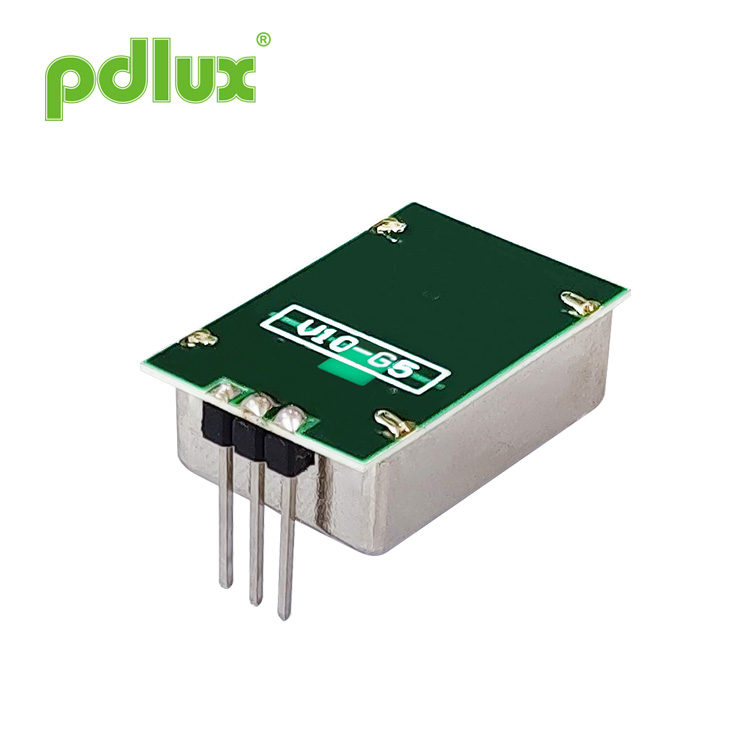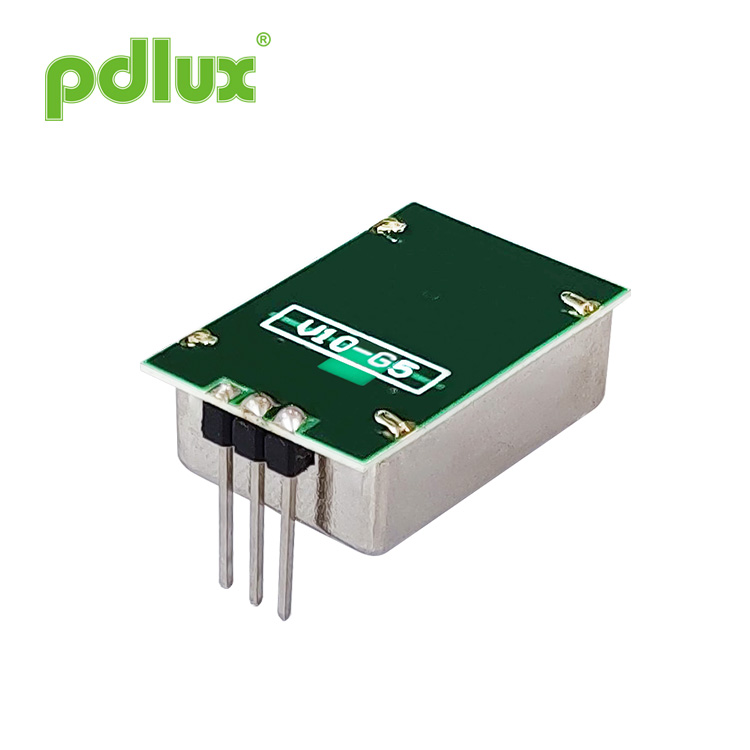





10.587GHz Security Microwave Radar Sensor Module
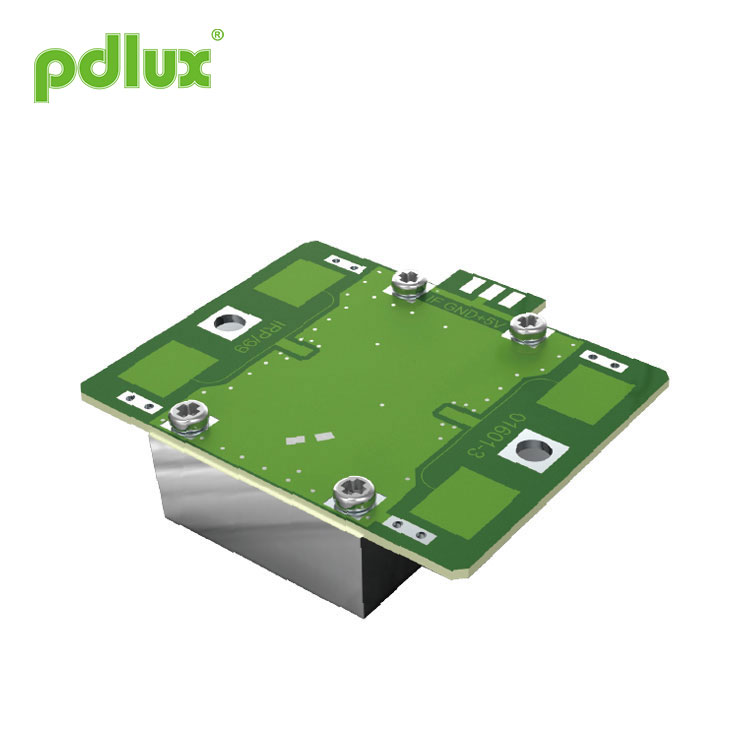
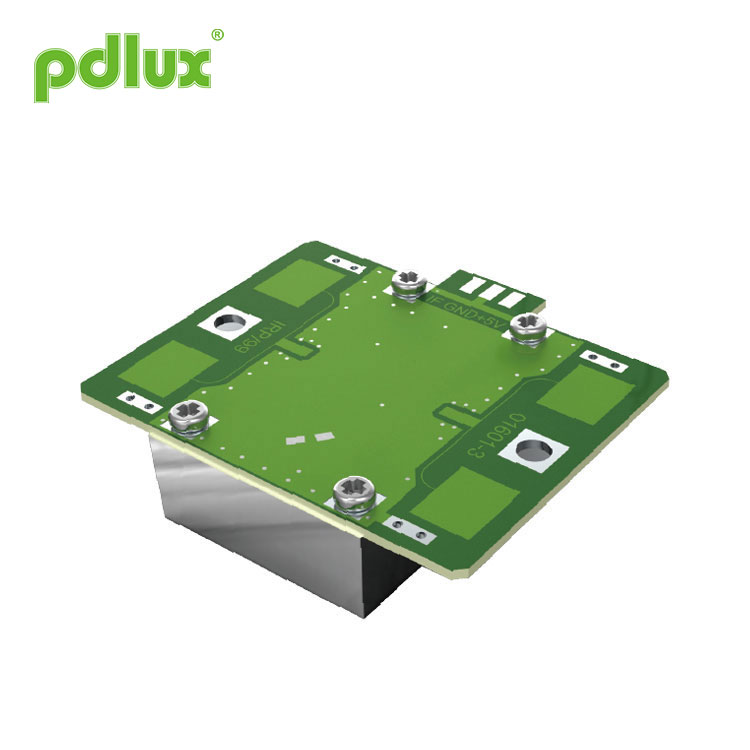
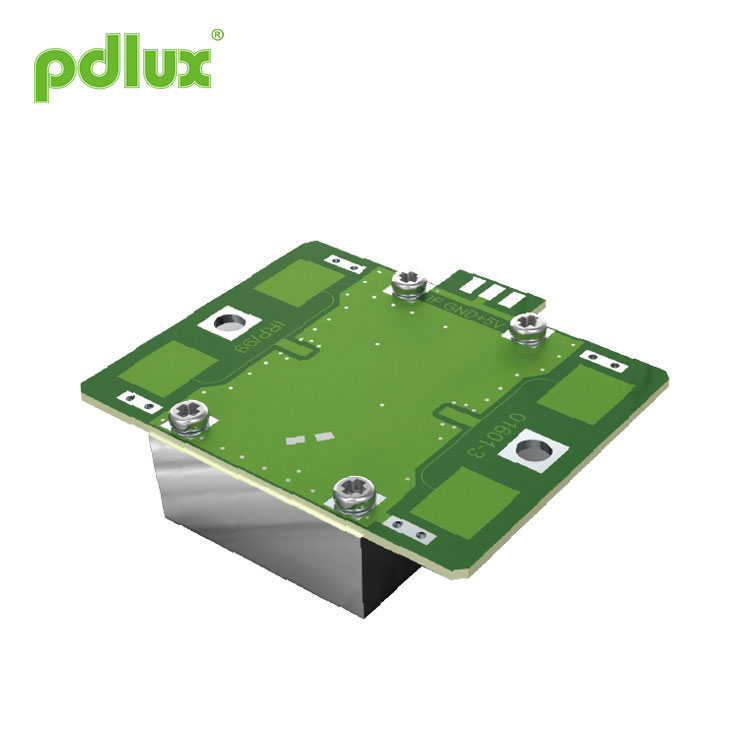
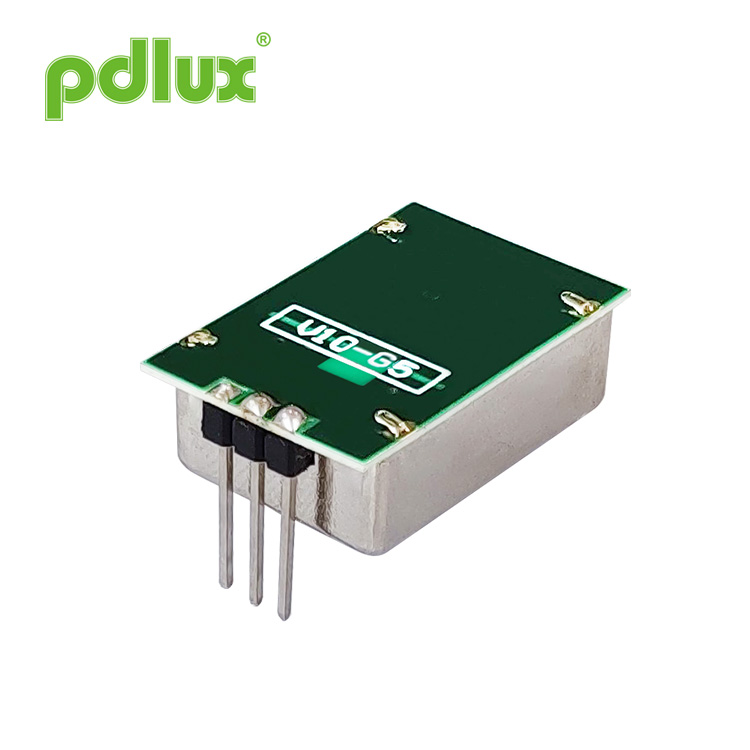
Pdlux is a dedicated supplier of 10.587GHz Security Microwave Radar Sensor Module operates in the X‑band (10.525‑10.687GHz, frequency customizable per region). Featuring a patch antenna, DRO, low current drain, and compact size, it provides both wide‑angle (H‑plane) and narrow‑angle (E‑plane) detection for flexible mounting. Power consumption can be further reduced via PWM mode. RoHS compliant, it is suitable for security systems, automatic doors, motion lighting, IoT, and speed sensors.
Model:PD-V9H
Send Inquiry
Product Details

PD-V9H

- Frequency Setting: 10.587GHz ±10M
- Including Patch Antenna
- DRO: Dielectric Resonator Oscilato
- Low DC Current Drain
- Small Size
- RoHS Compliance
| Item | Specifications | |
| Frequency Setting | 10.587GHz ±10M | |
| Condition | Ta = +25 C,Vin = +5 VDC | |
| Operating Voltage | +5.0 ± 0.5 VDC | |
| Operating Current | <32 mA typ. | |
| Output Power | 20 mW (13 dBm) E.I.R.P. typ. | |
| Frequency Stability | ±5 MHz max. (Ta: -30 to +55 C) | |
| Return Loss Sensitivity | -90 dBc typ. | |
| Second Harmonic Emission | -40 dBm range | |
| Antenna Beamwidth (-3 dB) | E-Plane | 36 degree nom. (The oretical full angle of 72 degrees) |
| H-Plane | 72 degree nom. (The oretical full angle of 144 degrees) | |
| RF Interface | Patch Antenna | |
| Temperature Range | -30 to +55 C (Standard usage scope), -40 to +80 C (Maximum usage range) | |
| Regulation for compliance | -30 ETS 300 440 | |

The PD-V9 series brightness sensor operates in the X-band. The operating frequency is in the frequency range of 10.525GHz to
10.687GHz. Users need to make purchases based on customize according to the frequency regulations of the country where it is
located. For example, 10.525GHz, 10.587GHz, 10.687GHz. The PD-V9 series sensors are widely used in security and surveillance
applications products, automatic door sensors, mobile sensing lights, IoT sensors, speed sensors, and various mobile sensor
products.
The sensor has H-Plane large angle detection and Eplan small angle detection. Users can fix the sensor at different angles as
needed during use. as if users want the working current of the sensor to be as small as possible, you can set the power supply mode
of the sensor to PWM (duty cycle) mode, which can effectively reduce the working current.
When users encounter the following issues while using or directly replacing the original sensor.
1. First use:
When you are using the PD-V9 series sensor for the first time and encounter high sensitivity or insufficient sensitivity, you should
first check the gain setting status of the amplification circuit. And whether the calculation method used by MCU to process signals
is appropriate. Generally speaking, it is easy to find a solution.
2. Possible issues that may arise when directly replacing previously used sensors:
When directly replacing previously used sensors, there may also be issues of high sensitivity and low sensitivity, which can be
easily resolved. Simply increasing the amplification circuit or decreasing the gain of the amplification circuit is sufficient. No need to
consider the signal processing algorithm of MCU.
Help that beginners may need when using:
If you encounter difficulties while using the PD-V9 series sensors and need assistance. You can contact us via email. Generally speaking, answers can be obtained.
Product Introduction:
The product introduction may be modified and improved by PDLUX at any time when necessary. Not necessarily will everyone be notified in a timely manner.